
Marine Air Condition Repair in Tampa Bay
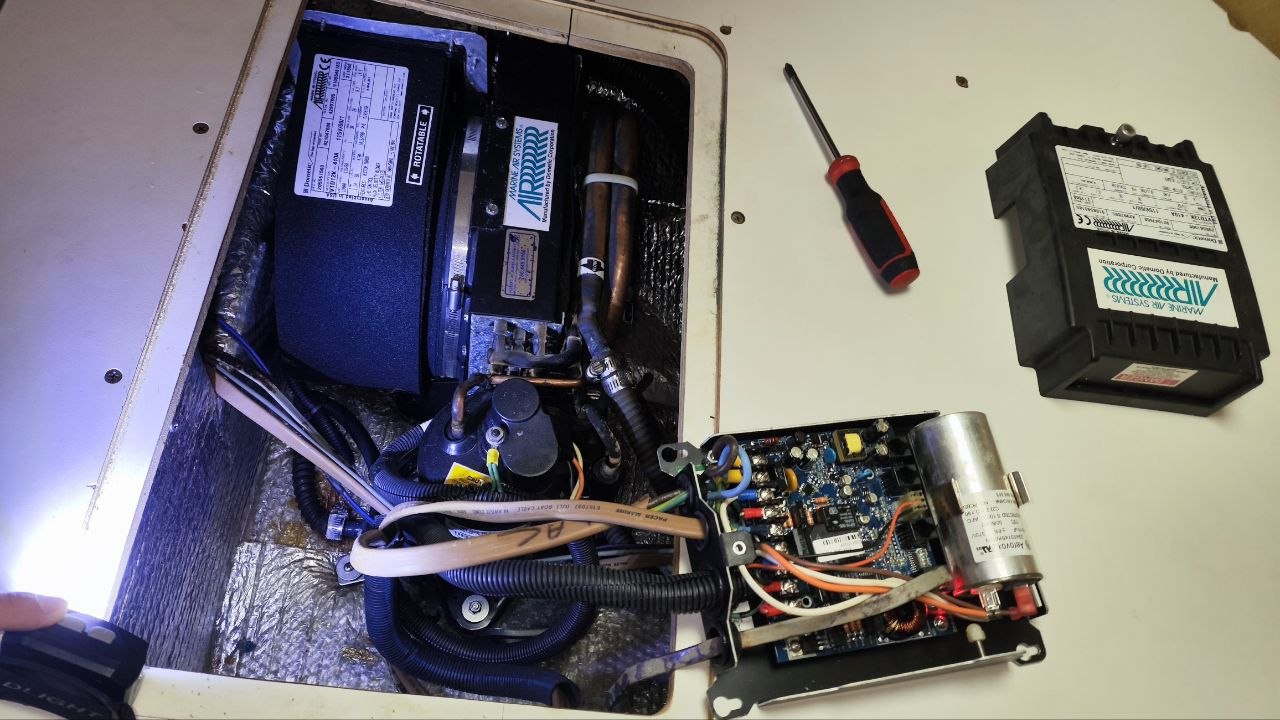
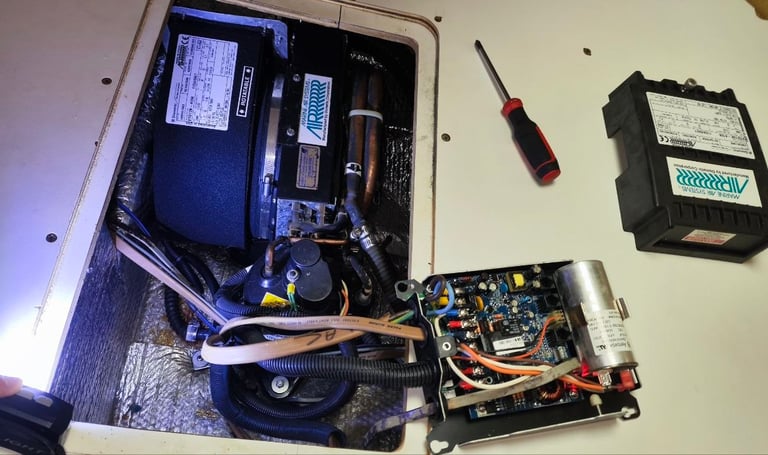
We provide high-quality marine air conditioning repair services in the Tampa Bay area and surrounding regions. We offer fast and reliable service, as well as a warranty of up to one year on virtually all types of repairs.
Call us right now to get your air conditioner repaired quickly.
Our Marine Air Condition service
Self-Contained Marine AC Repair
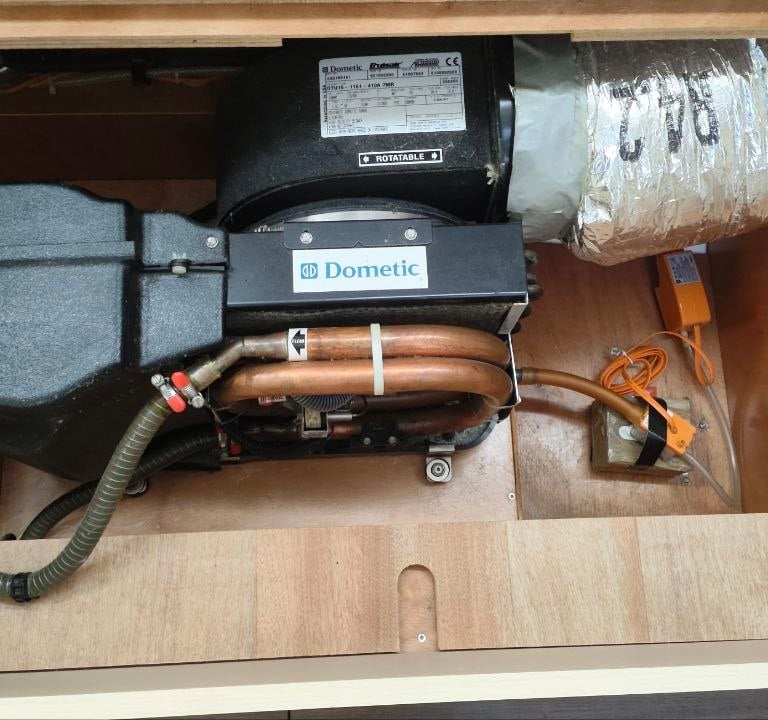
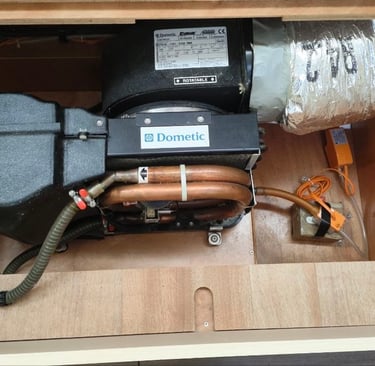
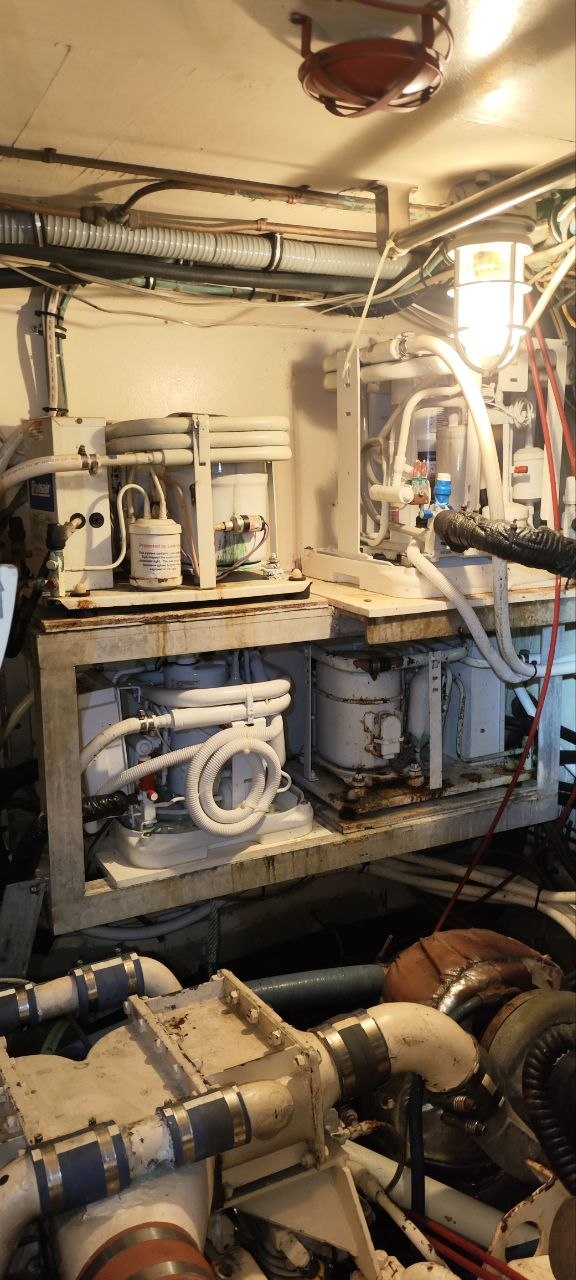
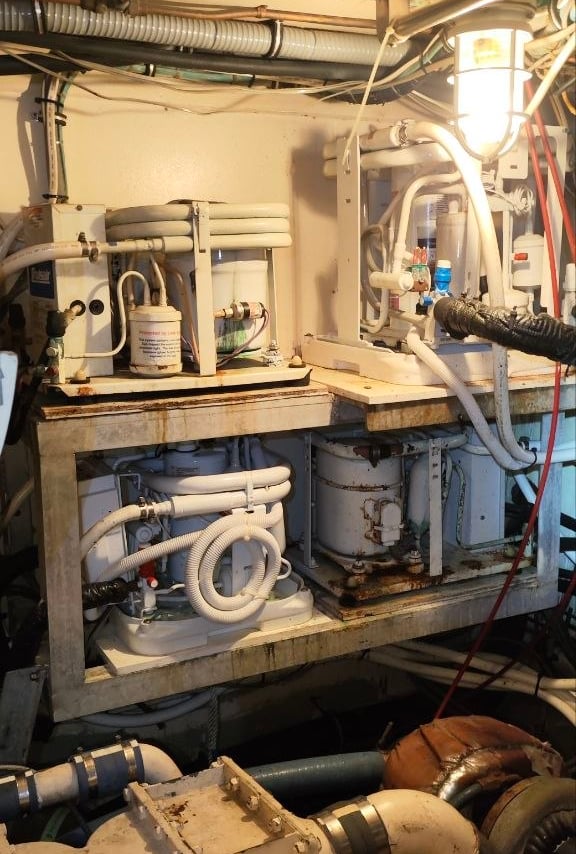
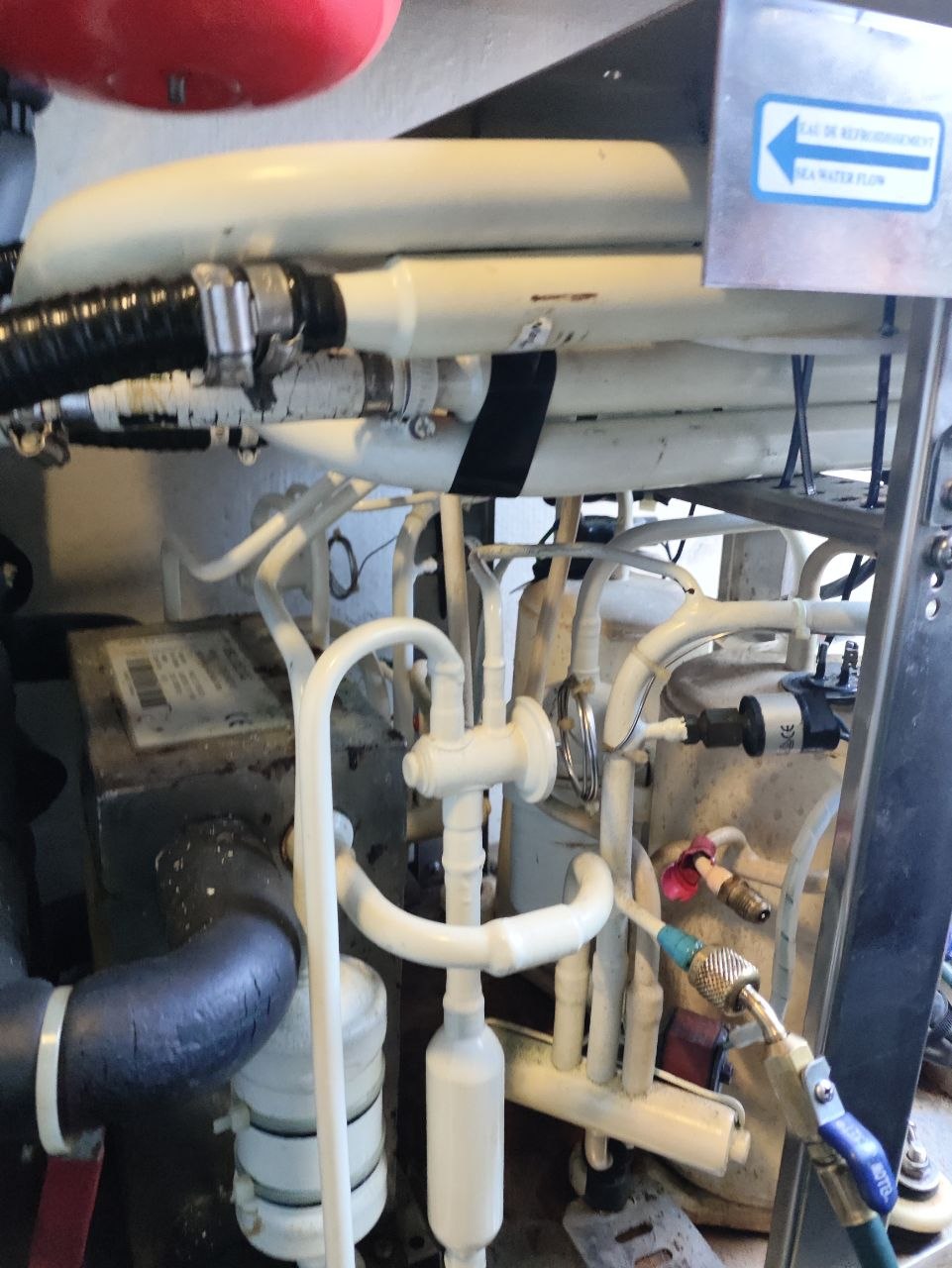
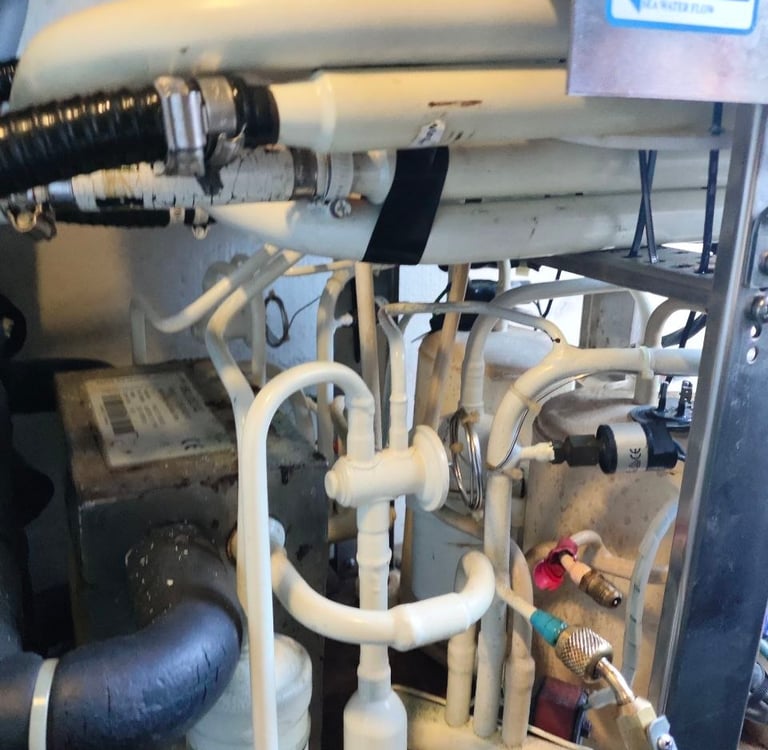
Split Gas Marine AC Repair
Marine AC Chiller Repair
🔧Common Marine AC Issues We Repair
🌊 Marine AC No Water Flow
No water flow is one of the most common issues in boat air conditioning systems. Without proper seawater circulation, the system will quickly shut down or stop cooling.
⚡ Marine AC Keeps Tripping Breaker
A breaker that trips repeatedly indicates overload or a short.
🔊 Marine AC Making Loud Noise
Unusual noise often indicates mechanical issues.
🌡️ Marine AC Not Responding to Thermostat
If your AC ignores thermostat settings, the control system may be faulty.
🧊 Marine AC Low Refrigerant Symptoms
Low refrigerant reduces cooling efficiency and can damage the compressor.
🧊 FT Error Code – Freeze Temperature
Coil is freezing
🌡️ P1 / P2 / P5 – Sensor Errors
Temperature sensor malfunction
❓ Things You Should Know About Marine AC
What is the difference between marine AC and home AC?
Marine AC systems use seawater for cooling instead of air-cooled condensers. They are also built to resist corrosion, vibration, and constant humidity.
How long do marine AC units last?
On average, a marine AC system lasts 8–15 years depending on maintenance, water quality, and usage. Regular cleaning and servicing can significantly extend lifespan.
How does a marine air conditioner work?
A marine AC uses seawater to remove heat from the refrigerant system. Warm air from inside the cabin is cooled through an evaporator, while heat is discharged overboard through a seawater loop.
How often should marine AC be serviced?
At least once per year. In Florida and saltwater environments, twice per year is recommended due to heavy corrosion and scaling.
Why does a marine AC need seawater?
Seawater is used to absorb and remove heat from the system. Without proper water flow, the AC cannot cool efficiently and may shut down.
What happens if there is no water flow?
The system will overheat and may trigger a high-pressure fault. If not corrected, it can damage the compressor.
How do I know if my marine AC pump is working?
You should see a steady stream of water discharging overboard. If there is no flow or weak flow, the pump or strainer may be clogged.
Why is my marine AC not cooling properly?
Common causes include low refrigerant, dirty condenser coils, or restricted seawater flow. These issues reduce heat exchange efficiency.
What temperature should a marine AC produce?
Typically, the air leaving the vent should be about 15–20°F cooler than cabin air when the system is operating correctly.
Why does my AC blow warm air sometimes?
This can happen due to low water flow, compressor cycling issues, or thermostat control problems.
Why does my marine AC trip the breaker?
This usually indicates electrical overload, a failing compressor, or a seized pump.
Can low voltage damage a marine AC?
Yes. Low voltage can cause overheating, compressor damage, and frequent tripping.
Can you run marine AC while underway?
Yes, but only if seawater intake is stable and generator or power source can handle the load.
What size marine AC do I need?
It depends on cabin volume, insulation, and climate. Undersized units will run constantly without cooling properly.
How much does marine AC repair cost?
Basic service may be inexpensive, but compressor or refrigerant repairs can be significantly higher depending on the issue.
Why is my marine AC noisy?
Noise usually comes from worn bearings, loose mounting, or failing fan or compressor components.